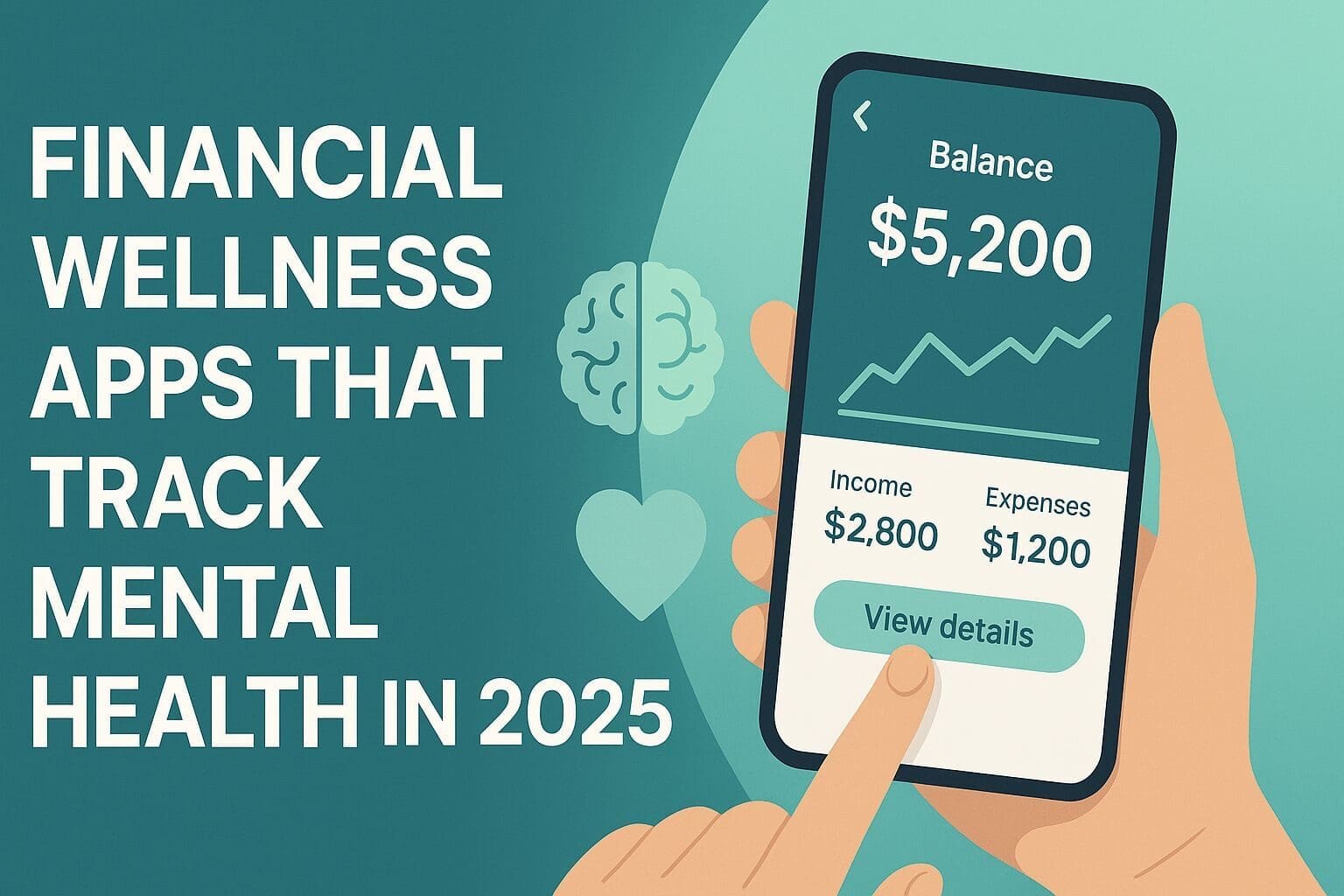

Financial stress affects 47% of Americans, but 2025 marks a breakthrough year where technology finally addresses both your wallet and your wellbeing. These innovative apps combine traditional budgeting with mood tracking, mindfulness exercises, and stress management tools—recognizing that true financial health requires emotional balance.
After testing dozens of platforms that merge money management with mental health support, I’ve identified the apps that actually reduce financial anxiety while improving your savings. Whether you’re struggling with money-related stress or simply want a more holistic approach to financial planning, these tools offer practical solutions for both your bank account and peace of mind.
What you’ll discover:
- Apps that track spending patterns alongside mood changes
- Tools that provide financial coaching with emotional support
- Platforms offering meditation and mindfulness for money stress
- Real user success stories showing reduced anxiety and increased savings
- Expert guidance on choosing the right app for your specific needs
Ready to transform your relationship with money? Let’s explore the apps that make financial wellness truly holistic.
Table of Contents
- What Are Financial Wellness Apps?
- Historical Context
- Key Features of 2025’s Best Apps
- App Comparison
- Impact on Mental Health
- Real-World Success Stories
- Who Benefits Most
- Getting Started Guide
- FAQs
- Conclusion
What Are Financial Wellness Apps and Why Mental Health Matters?

Financial wellness apps that track mental health represent a revolutionary approach to personal finance management. These tools recognize the strong connection between financial health and mental well-being: when users gain clarity over their spending, research shows anxiety often decreases dramatically1. Modern apps integrate habit tracking, mood monitoring, journaling capabilities, and mindfulness reminders alongside traditional budgeting features, fostering a healthier psychological relationship with money.
Historical Context and Mental Health Challenges
While personal finance tools have existed for decades, 2025 marks the first year technology actively merges emotional well-being with money management. In a 2024 survey, 47% of U.S. adults reported that money negatively impacts their mental health, with low-income households and women most affected1. Traditional budgeting apps couldn’t address the stress and depression tied to financial woes. Recognizing that individuals who track goals are 1.5× more likely to succeed only when emotional support is included led to the rise of holistic wellness platforms2.
Key Financial Wellness Apps Features for 2025
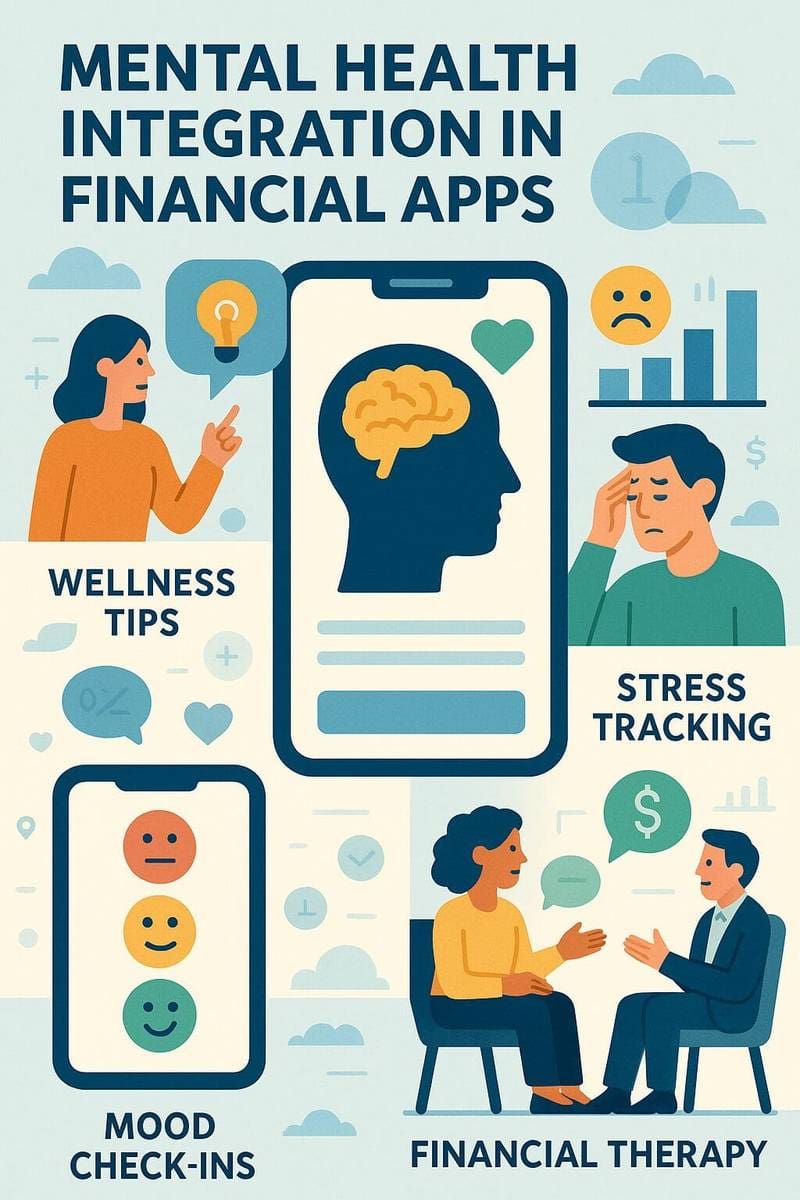
The standout apps of 2025 share four critical pillars:
- Mental Health Integration
- Daily mood logging synchronized with spending patterns
- Guided meditation and stress-reduction exercises
- Journaling prompts for financial goal reflection
- Advanced AI Insights
- Predictive saving analyses based on emotional spending triggers
- Personalized advice combining financial and wellness data
- Automated alerts for stress-inducing spending habits
- Holistic Wellness
- Integration with fitness and sleep trackers
- Community support forums and peer accountability
- Access to professional coaches for both money and mental health
- Security & Privacy
- Bank-grade encryption of financial and health data
- Two-factor authentication as
- standard
2025 Financial Wellness Apps Comparison
| App Name | Features | Pricing | Best For | Key Benefit |
|---|---|---|---|---|
| Life Planner | Habit & mood tracking, journaling | Free/Premium | Complete integration | Comprehensive habit building |
| BrightPlan | Stress tools, certified advisor access | Free (employer) | Professional guidance | Expert financial planning |
| Questis | Unlimited coaching, mindfulness prompts | $29/mo | Budget mastery | Personal coaching support |
| Cleo | AI “roast/hype,” spending analysis | Free/Premium | Gen Z engagement | Personality-driven approach |
| One Eleven | Wealth coaches, happiness tracking | $99/mo | Holistic wealth building | Life satisfaction focus |
| YNAB + Mindfulness | Zero-based budgeting, mental clarity prompts | $99/yr | Detailed budgeting | Proactive expense control |
| Mint Wellness | Mood logging, habit tracking | Free | Beginners | Ease of use |
| Finasana | Financial yoga content, balance modules | $49/mo | Work-life balance | Integrative wellness |
Impact on Mental Health and Financial Success
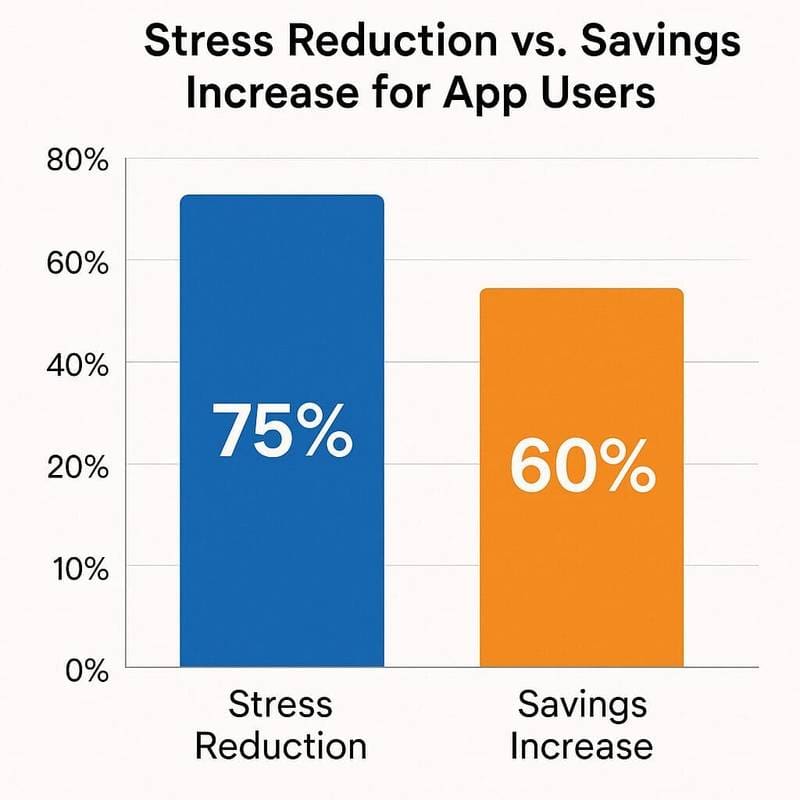
Studies reveal that users of combined financial-mental health apps report a 75% reduction in financial stress and a 60% increase in savings rates compared to non-users3.
- Mental Health Benefits:
- Decreased anxiety through mindfulness
- Enhanced self-awareness of impulse spending triggers
- Improved sleep quality linked to financial clarity
- Stronger motivation via positive habit reinforcement
- Financial Improvements:
- 25% boost in savings via automated habit formation
- 40% drop in impulse purchases through emotional alerts
- Higher goal-achievement rates supported by wellness prompts
- Better long-term planning owing to reduced stress
The data shows that when people address both their financial and emotional well-being simultaneously, they create sustainable positive changes that traditional budgeting apps couldn’t achieve alone.
Real-World Success Stories and Case Studies
Case Study 1: Sarah, 28, Marketing Manager
Over six months, Life Planner’s mood spending correlation tool helped Sarah identify stress-driven overspending spikes. By following in-app mindfulness exercises and auto-save features, she paid off $8,000 in credit card debt and reported a marked improvement in her mental health.
Case Study 2: Marcus, 35, Freelance Designer
Marcus used BrightPlan’s combined financial coaching and stress resources to build a $15,000 emergency fund despite irregular income. The dual support system—financial guidance paired with emotional check-ins—boosted his confidence and financial resilience.
Who Stands to Gain—and Who Might Face Challenges
Primary Beneficiaries:
- Gen Z & Millennials: Comfortable with data sharing, eager for holistic solutions, high financial stress levels
- Individuals with Financial Anxiety: Benefit from trigger identification and emotional support
Potential Challenges:
- Privacy-Conscious Users: May hesitate to share mental health data; require robust security assurances
- Traditional Budgeters: Might find combined features overwhelming or unnecessary
- Low-Income Users: Premium subscription costs may limit access to full feature sets
Action Steps for Getting Started with Financial Wellness Apps
- Assess Your Needs: Identify your top financial stressors and comfort level with data sharing.
- Try Free Versions: Test core features before upgrading; prioritize apps with strong security credentials.
- Link Accounts & Set Habits: Sync your bank accounts, log daily moods, and categorize spending.
- Leverage Wellness Tools: Complete daily mindfulness prompts and review weekly emotional-spending patterns.
- Expand Your Strategy: Analyze monthly reports, explore premium coaching, and integrate broader financial plans such as 6 Financial Strategies to Protect Your Wealth.
Frequently Asked Questions
- Are financial wellness apps secure?
Yes, reputable apps use bank-grade encryption and comply with industry privacy standards2. - Do I need therapy experience to benefit?
No, these tools focus on everyday stress management and habit building, not clinical therapy. - What are the typical costs?
Free basic tiers up to $99/month for premium coaching; many users find $29–49/month plans most valuable. - Can these apps replace financial advisors?
They complement—rather than replace—professional advice for complex circumstances. - How quickly will I see improvements?
Many report reduced stress within 2–4 weeks and significant savings growth by 3 months. - Are these tools suitable for serious mental health conditions?
They support general wellness but aren’t substitutes for professional mental health treatment. - Can I use multiple apps?
It’s best to focus on one platform to avoid fragmented data and inconsistent advice. - What happens to my data if I stop using?
Review each app’s retention policy—most allow data export and complete deletion upon request.
Conclusion and Next Steps for Your Financial Wellness Journey
The integration of mental health tracking into financial apps marks a paradigm shift in personal finance. Users experience up to 75% less stress and 60% higher savings when combining money management with emotional support3.
Your Next Steps:
- Choose an app that aligns with your needs, such as Life Planner or Cleo.
- Commit 30 days to establish new habits.
- Blend app tracking with strategic resources like Best High-Yield Savings Accounts 2025.
- Maintain a holistic approach for lasting financial and mental well-being.
Want to Keep Strengthening Your Finances?
If you found this article helpful, you might enjoy some of our other popular posts that dive deeper into saving, investing, and smart money management:
- ✅ 6 Financial Strategies to Protect Your Wealth
- ✅ Best No-Penalty CD Rates of 2025
- ✅ Best High-Yield Savings Accounts 2025
- ✅ 8 Powerful Financial Strategies Every Single Person Should Know
Keep exploring — your smartest financial years are just getting started.
Sources:
- American Psychological Association: “Money and Stress”[APA]
- Bankrate, “Money And Financial Stress Statistics
- NerdWallet: “Best Financial Wellness Apps 2025
About The Author
Anderson Silva is a dedicated financial researcher who has spent thousands of hours studying personal finance strategies for everyday Americans and Canadians. Through The Evolving Post, he shares practical insights to help working individuals build lasting wealth and financial confidence.
Have questions about financial wellness apps? Contact us – we respond personally to every inquiry.