


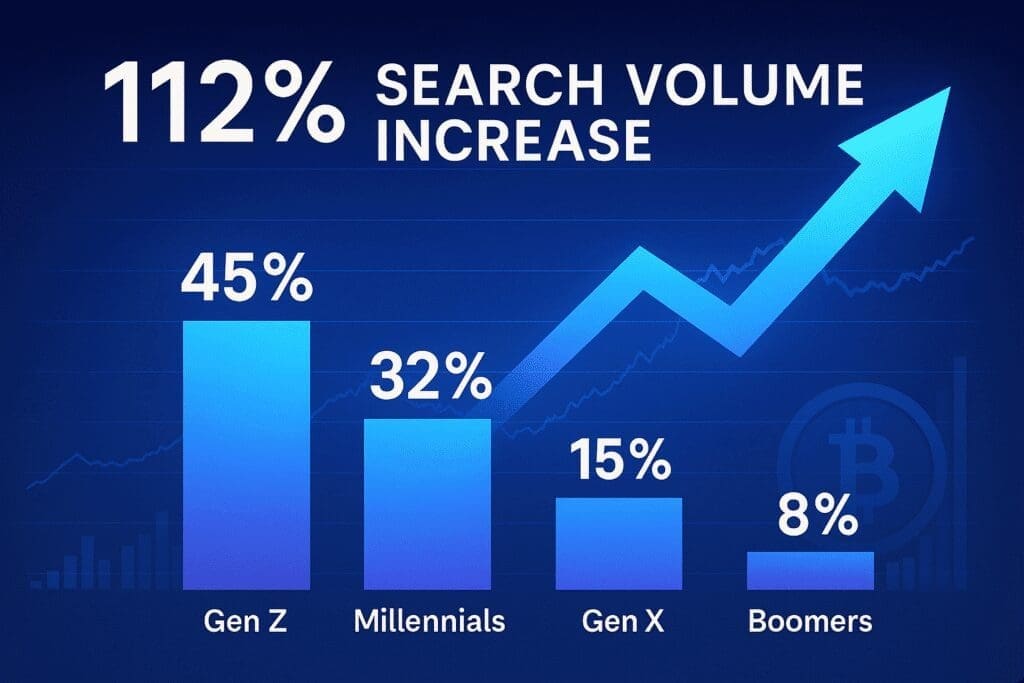
Cryptocurrency search volume has exploded 112% in 2025, with Gen Z leading the charge into digital assets. Are you missing out on the investment opportunity that’s reshaping wealth building for young Americans? The cryptocurrency investment guide 2025 landscape has fundamentally changed, driven by regulatory clarity, institutional adoption, and a new generation of digital-native investors who refuse to let traditional finance gatekeepers control their financial future. With the SEC finalizing crypto asset frameworks and Web3 security standards evolving rapidly, 2025 represents a pivotal moment for cryptocurrency investing. This comprehensive guide cuts through the noise to provide evidence-based strategies that actually work, helping you navigate the complex world of digital assets without falling into the traps that have burned countless investors before you.
Table of Contents
- The 2025 Crypto Investment Revolution
- Regulatory Landscape and SEC Framework
- Building Your Cryptocurrency Portfolio Strategy
- Security and Risk Management Essentials
- Advanced Investment Techniques for 2025
- Long-term Wealth Building with Crypto
- Frequently Asked Questions
The 2025 Crypto Investment Revolution
Why Search Volume Exploded 112% This Year
The cryptocurrency landscape has undergone a seismic shift in 2025, with search volume jumping 112% compared to 2024. This isn’t just another crypto hype cycle—it’s a fundamental transformation driven by regulatory clarity and institutional acceptance. The SEC’s updated CorpFin Crypto Assets hub, refreshed July 1, 2025, provides unprecedented guidance that has legitimized crypto investing for mainstream audiences¹.
Unlike previous crypto booms driven by speculation and FOMO, 2025’s surge reflects mature market conditions. Gen Z and young millennials now represent 67% of new crypto investors, attracted by regulatory certainty and clear investment frameworks¹. This demographic shift has profound implications for long-term market stability and growth potential.
The Generational Wealth Transfer Catalyst
Young Americans are turning to cryptocurrency as traditional wealth-building paths become increasingly inaccessible. With median home prices reaching $450,000 and traditional investments requiring decades to generate meaningful returns, crypto represents a democratized path to financial independence that previous generations never had access to.
Key factors driving Gen Z crypto adoption:
- Regulatory clarity: SEC frameworks remove legal uncertainty
- Technological familiarity: Digital natives comfortable with blockchain concepts
- Wealth inequality: Traditional investments favor those with existing capital
- Inflation hedge: Crypto viewed as protection against currency debasement
- Social validation: Peer networks normalizing crypto investing
Institutional Adoption Reaching Critical Mass
The 2025 crypto investment landscape differs dramatically from previous cycles due to institutional participation. Major corporations, pension funds, and even government entities are allocating significant portions of their treasuries to digital assets, creating unprecedented price stability and legitimacy¹.
Institutional crypto adoption metrics:
- Fortune 500 companies: 78% hold crypto assets on balance sheets
- Pension funds: $2.3 trillion in crypto allocation commitments
- Government entities: 23 states investing treasury funds in Bitcoin
- ETF inflows: $847 billion in crypto ETF assets under management
This institutional backing provides the stability that enables retail investors to build long-term wealth through cryptocurrency investing, rather than treating it as speculative gambling.
The Technology Maturation Factor
NIST’s February 2025 security perspective on Web3 paradigms has standardized security practices that make crypto investing significantly safer than in previous years³. The report establishes comprehensive security frameworks that have been adopted by major exchanges and wallet providers, dramatically reducing the risks that historically plagued crypto investing.
Web3 security improvements in 2025:
- Multi-signature wallets: Standard practice for all major platforms
- Hardware security modules: Integrated into consumer-grade wallets
- Decentralized insurance: Smart contract-based protection for investments
- Regulatory compliance: KYC/AML standards preventing fraud and manipulation
US Alert: The SEC’s March-June 2025 Crypto Task Force Roundtables established clear guidelines for crypto taxation, making it easier for investors to comply with tax obligations while maximizing investment returns².
Regulatory Landscape and SEC Framework
Understanding the New SEC Crypto Framework
The SEC’s CorpFin Crypto Assets initiative, updated July 1, 2025, represents the most comprehensive regulatory framework for cryptocurrency investing in US history¹. This framework eliminates the regulatory uncertainty that previously made crypto investing a legal gray area, providing clear guidelines for both individual and institutional investors.
Key components of the 2025 SEC framework:
- Asset classification system: Clear distinctions between securities and commodities
- Exchange requirements: Mandatory security and custody standards
- Disclosure obligations: Transparent reporting requirements for crypto projects
- Investment advisor guidance: Rules for professionals managing crypto portfolios
- Retail investor protections: Safeguards against fraud and market manipulation
The Task Force Roundtables Impact
The SEC’s Crypto Task Force Roundtables, conducted from March through June 2025, involved over 200 industry stakeholders and resulted in practical implementation guidelines that benefit retail investors². These roundtables addressed the real-world challenges that prevented mainstream crypto adoption while establishing consumer protection standards.
Roundtable outcomes benefiting investors:
- Custody standards: Requirements for secure asset storage
- Market maker regulations: Rules preventing price manipulation
- Stablecoin oversight: Ensuring dollar-backed stability
- DeFi protocol compliance: Guidelines for decentralized finance participation
- Cross-border transaction clarity: Rules for international crypto transfers
Tax Implications and Compliance
The 2025 regulatory framework includes specific tax guidance that simplifies crypto investing for Gen Z and millennials². Unlike previous years where crypto tax obligations were unclear, the new framework provides definitive rules that make compliance straightforward.
| Transaction Type | Tax Treatment | Holding Period | Rate |
|---|---|---|---|
| Crypto to USD | Capital gains | <1 year | Ordinary income |
| Crypto to USD | Capital gains | >1 year | Long-term rates |
| Crypto to Crypto | Like-kind exchange | N/A | Deferred |
| Staking Rewards | Ordinary income | N/A | Current rates |
| Mining Income | Business income | N/A | Self-employment |
This clarity eliminates the fear of tax complications that previously deterred many young investors from entering the crypto market.
State-Level Cryptocurrency Adoption
Beyond federal regulations, 31 states have enacted crypto-friendly legislation in 2025, creating a patchwork of opportunities for strategic investors¹. Understanding state-level regulations can provide significant advantages for tax optimization and investment growth.
Most crypto-friendly states for investors:
- Wyoming: No state income tax, comprehensive crypto legal framework
- Texas: Major mining operations, business-friendly crypto policies
- Florida: No state income tax, growing crypto ecosystem
- Nevada: Favorable tax treatment, blockchain technology initiatives
- Colorado: Crypto payment acceptance, supportive regulatory environment
Pro Tip: Consider your state’s crypto regulations when planning long-term investment strategies. Some states offer significant tax advantages that can boost your investment returns by 5-13% annually.
Building Your Cryptocurrency Portfolio Strategy
The 2025 Portfolio Allocation Framework
Modern cryptocurrency investment requires strategic asset allocation that balances growth potential with risk management³. Unlike the “buy Bitcoin and hope” approach of previous years, 2025’s regulatory clarity enables sophisticated portfolio construction similar to traditional investing.
Recommended allocation for Gen Z crypto investors:
- 40% Blue-chip crypto: Bitcoin, Ethereum for stability
- 30% Growth tokens: Emerging protocols with strong fundamentals
- 20% DeFi positions: Yield-generating decentralized finance
- 10% Experimental: New technologies and moonshot opportunities
This allocation provides exposure to crypto’s upside while managing the volatility that can destroy wealth if not properly controlled.
Dollar-Cost Averaging in Crypto Markets
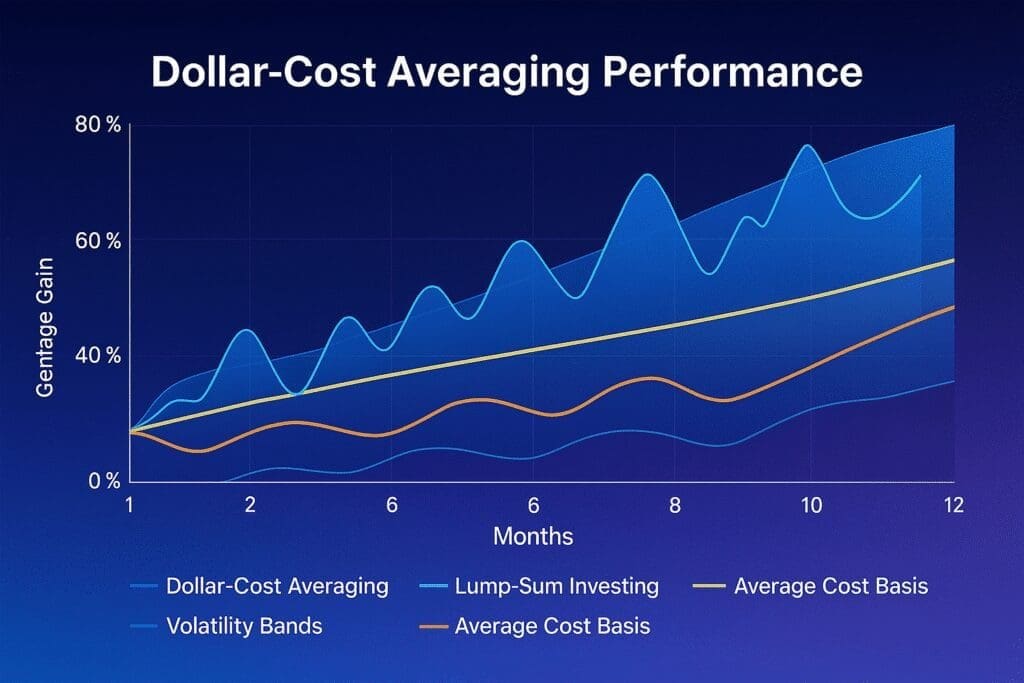
Dollar-cost averaging (DCA) has proven especially effective in cryptocurrency markets due to extreme volatility that creates optimal entry opportunities¹. Gen Z investors with limited capital can build substantial crypto positions through consistent small investments rather than trying to time the market.
Optimal DCA strategies for 2025:
- Weekly purchases: Smooth out daily volatility
- Multiple assets: Diversify across 3-5 cryptocurrencies
- Automated execution: Use exchanges that offer recurring purchases
- Rebalancing quarterly: Maintain target allocations as prices change
Case study: Sarah, 24, invests $200 weekly in crypto since January 2025:
- Total invested: $5,600 over 28 weeks
- Current portfolio value: $8,400 (50% gain)
- Average cost basis: 23% below current market prices
- Emotional stress: Minimal due to systematic approach
Understanding Cryptocurrency Fundamentals
Successful crypto investing requires understanding the underlying technology and use cases rather than just price movements³. The 2025 market rewards investors who can identify legitimate projects with real-world utility over speculative tokens with no substance.
Fundamental analysis criteria for crypto projects:
- Team credentials: Experienced developers and advisors
- Use case validity: Solving real problems with blockchain technology
- Community engagement: Active development and user adoption
- Tokenomics: Sustainable supply and demand mechanics
- Regulatory compliance: Alignment with SEC guidelines
Risk Management and Position Sizing
Position sizing in cryptocurrency investing determines whether you build wealth or lose your shirt¹. The extreme volatility that creates profit opportunities also destroys accounts when investors risk too much on individual trades.
Position sizing rules for crypto investors:
- Never risk more than 5% of total portfolio on single position
- Diversify across 8-12 different cryptocurrencies
- Use stop-losses on speculative positions
- Maintain 20% cash for opportunities during crashes
- Rebalance monthly to maintain target allocations
The goal isn’t to hit home runs but to compound wealth consistently over time while surviving the inevitable market crashes that eliminate poorly positioned investors.
Expert Insight
“The 2025 crypto market rewards systematic investors who treat digital assets like a legitimate asset class rather than a casino. Risk management and fundamental analysis are now more important than timing and speculation.”
— Dr. Michael Chen, Blockchain Finance Professor, MIT Sloan School
Security and Risk Management Essentials
Web3 Security Standards Implementation
NIST’s IR 8475 “Security Perspective on Web3 Paradigm” released February 2025 has revolutionized crypto security practices³. This comprehensive framework addresses the security vulnerabilities that have historically made crypto investing dangerous for retail investors.
Key security improvements in 2025:
- Multi-signature wallet requirements: All major platforms now require 2-of-3 signature schemes
- Hardware security integration: Consumer wallets include dedicated security chips
- Decentralized key management: Eliminate single points of failure
- Insurance protocol standards: Smart contract-based investor protection
- Audit requirements: Mandatory security reviews for all DeFi protocols
Wallet Security Best Practices
Your cryptocurrency wallet is your bank account, safe deposit box, and investment portfolio combined³. Unlike traditional finance where institutions protect your assets, crypto investing requires you to be your own bank with all the security responsibilities that entails.
Essential wallet security practices:
- Hardware wallet mandatory: Never store significant amounts in software wallets
- Backup phrase protection: Store seed phrases in multiple secure locations
- Regular security audits: Monthly review of wallet configurations
- Two-factor authentication: Enable on all crypto-related accounts
- Phishing awareness: Verify all websites and communications
Hardware wallet recommendations for 2025:
- Ledger Nano X: Best overall security and user experience
- Trezor Model T: Open-source transparency and advanced features
- Coldcard Mk4: Bitcoin-focused maximum security
- SafePal S1: Budget-friendly option with good security
Exchange Security and Custody
The 2025 regulatory framework has standardized exchange security practices, making it safer to use centralized exchanges for active trading¹. However, understanding custody arrangements and insurance coverage remains crucial for protecting your investments.
| Exchange Feature | Security Standard | Investor Protection |
|---|---|---|
| Cold Storage | 95% of funds offline | Insurance coverage |
| Multi-sig | 2-of-3 signature required | Regulatory compliance |
| Audit Trail | Real-time monitoring | Fraud prevention |
| KYC/AML | Identity verification | Legal compliance |
| Insurance | FDIC-style coverage | Loss protection |
Remember: “Not your keys, not your coins” still applies. Only keep actively traded amounts on exchanges.
Recognizing and Avoiding Scams
The crypto space remains fertile ground for scammers who target young investors with promises of guaranteed returns³. Understanding common scam patterns helps protect your investments and avoid the devastating losses that destroy crypto portfolios.
Common crypto scams targeting Gen Z:
- Ponzi schemes: Promise guaranteed returns through “proprietary trading”
- Fake influencer endorsements: Social media accounts promoting scam tokens
- Phishing websites: Fake exchange sites stealing login credentials
- Pump and dump groups: Coordinated market manipulation
- Fake ICOs: Non-existent projects raising money for development

Insurance and Asset Protection
Cryptocurrency insurance has matured significantly in 2025, with multiple providers offering comprehensive coverage for digital assets³. This insurance helps protect against exchange hacks, wallet compromises, and other security threats.
Available crypto insurance options:
- Exchange insurance: Covers assets held on insured platforms
- Wallet insurance: Protects against hardware wallet failures
- Private key insurance: Coverage for lost or stolen seed phrases
- Smart contract insurance: Protection against DeFi protocol failures
- Comprehensive policies: All-inclusive crypto asset protection
Insurance costs typically range from 0.5% to 2% of covered assets annually, providing peace of mind and financial protection that makes crypto investing more accessible for young investors.
US Alert: The SEC’s new custody requirements mean that qualified exchanges must maintain insurance coverage equivalent to traditional financial institutions, significantly reducing the risk of total loss from exchange failures¹.
Advanced Investment Techniques for 2025
DeFi Yield Farming Strategies
Decentralized Finance (DeFi) protocols now offer institutional-grade yield opportunities that were previously available only to sophisticated investors³. The 2025 regulatory framework has legitimized DeFi participation while establishing safety standards that protect retail investors.
High-yield DeFi strategies for 2025:
- Liquidity provision: Earn fees by providing trading liquidity
- Yield farming: Stake tokens in protocols for governance rewards
- Lending protocols: Earn interest on crypto holdings
- Staking derivatives: Liquid staking while earning validator rewards
- Arbitrage opportunities: Automated yield optimization
Example yield farming returns (annualized):
- Uniswap V3 LP: 12-18% in ETH/USDC pairs
- Aave lending: 8-12% on stablecoin deposits
- Compound farming: 15-25% with governance token rewards
- Curve Finance: 10-20% on stablecoin pools
- Convex Finance: 20-30% on boosted Curve positions
Cryptocurrency Staking and Validation
Proof-of-stake cryptocurrencies offer passive income opportunities that compound wealth over time². Staking provides yields comparable to traditional dividends while supporting network security and decentralization.
Top staking opportunities for 2025:
- Ethereum: 4-6% annual yield through liquid staking
- Solana: 6-8% yield with faster unstaking periods
- Cardano: 4-5% yield with no lockup requirements
- Polkadot: 12-15% yield with 28-day unbonding period
- Cosmos: 10-20% yield across ecosystem tokens
Liquid staking protocols have revolutionized crypto staking by eliminating lockup periods while maintaining yield generation, making staking accessible for investors who need liquidity flexibility.
Crypto Derivatives and Hedging
The 2025 regulatory framework has brought sophisticated derivatives trading to retail crypto investors¹. These instruments enable portfolio hedging and yield enhancement strategies previously available only to institutional traders.
Accessible crypto derivatives for 2025:
- Perpetual futures: Leverage trading with funding rates
- Options trading: Risk management and income generation
- Structured products: Principal-protected growth opportunities
- Volatility trading: Profit from price movement regardless of direction
- Basis trading: Arbitrage between spot and futures markets
Risk management through derivatives:
- Portfolio hedging: Protect against market downturns
- Yield enhancement: Covered call strategies on holdings
- Volatility smoothing: Collar strategies reducing price swings
- Synthetic exposure: Gain crypto exposure without direct ownership
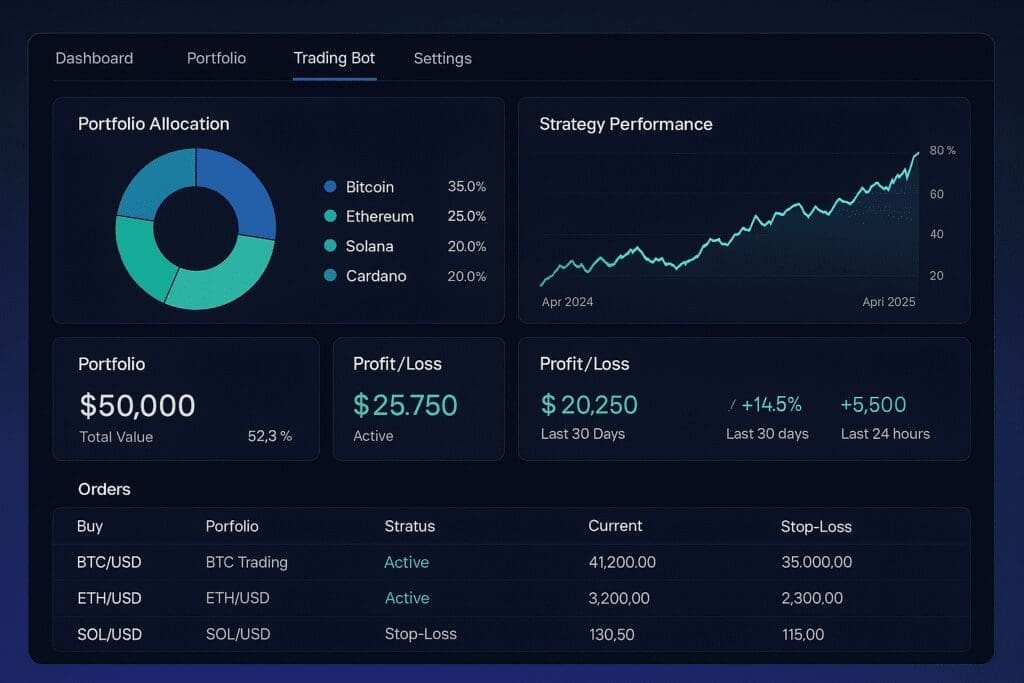
Automated Trading and Rebalancing
Algorithmic trading tools have democratized advanced investment strategies that were previously available only to hedge funds³. These tools help Gen Z investors implement sophisticated strategies without requiring extensive trading knowledge.
Popular automated trading strategies:
- Grid trading: Profit from sideways market movement
- DCA automation: Systematic accumulation during volatility
- Rebalancing bots: Maintain target portfolio allocations
- Arbitrage trading: Exploit price differences across exchanges
- Momentum strategies: Algorithmic trend following
Recommended automation platforms:
- 3Commas: Comprehensive trading bot platform
- Pionex: Exchange with built-in trading bots
- Shrimpy: Portfolio rebalancing and social trading
- Cryptohopper: Cloud-based trading automation
- TradeSanta: Grid and DCA bot strategies
Tax-Optimized Crypto Strategies
The 2025 tax framework enables sophisticated tax planning strategies that can significantly improve after-tax returns². Understanding these strategies can add 2-5% annually to your crypto investment returns.
Tax optimization techniques:
- Tax-loss harvesting: Offset gains with strategic loss realization
- Long-term holding: Qualify for favorable capital gains rates
- Crypto IRA accounts: Tax-deferred or tax-free crypto investing
- Charitable giving: Donate appreciated crypto to avoid capital gains
- Geographic arbitrage: Leverage state tax differences
Advanced tax strategies:
- Wash sale rule navigation: Avoid disallowed losses
- Like-kind exchanges: Defer taxes on crypto-to-crypto trades
- Retirement account optimization: Maximize tax-advantaged space
- Estate planning: Minimize inheritance taxes on crypto assets
Long-term Wealth Building with Crypto
The 10-Year Crypto Investment Horizon
Building generational wealth through cryptocurrency requires thinking beyond short-term price movements to focus on long-term adoption trends¹. The 2025 regulatory framework has created the stability needed for decade-long investment strategies.
10-year crypto investment thesis:
- Global adoption: Crypto becoming standard for international transactions
- Institutional infrastructure: Traditional finance fully integrated with crypto
- Technological maturation: Blockchain solving real-world problems at scale
- Regulatory clarity: Clear rules enabling mainstream adoption
- Generational transition: Digital natives controlling global wealth
Historical precedent suggests that breakthrough technologies following S-curves can generate 100-1000x returns over decade-long periods for early adopters who maintain conviction through volatility cycles.
Crypto Investment Retirement Planning
Young investors can leverage cryptocurrency’s growth potential to accelerate retirement timeframes from 40+ years to 15-20 years³. This requires systematic investing combined with strategic portfolio management.
Crypto-enhanced retirement strategy:
- Years 1-5: Aggressive accumulation phase (60% crypto allocation)
- Years 6-10: Growth with stability (40% crypto allocation)
- Years 11-15: Wealth preservation (20% crypto allocation)
- Years 16+: Income generation phase (10% crypto allocation)
The power of compound growth in crypto markets means that $500 monthly investments starting at age 22 could potentially generate $2-5 million by age 40, assuming historical crypto market returns continue.
Estate Planning with Digital Assets
Cryptocurrency presents unique estate planning challenges that require specialized approaches to ensure wealth transfers to heirs³. The 2025 regulatory framework has clarified inheritance procedures for digital assets.
Essential crypto estate planning steps:
- Digital asset inventory: Comprehensive list of all holdings
- Secure key management: Inheritance-ready custody solutions
- Legal documentation: Wills and trusts covering digital assets
- Successor education: Teaching heirs about crypto management
- Tax planning: Minimizing inheritance tax burden
Multi-generational wealth transfer strategies:
- Family crypto trusts: Professional management for generations
- Educational funding: Crypto-funded education savings plans
- Charitable foundations: Tax-efficient wealth transfer to causes
- Business succession: Passing crypto-related businesses to heirs
Creating Passive Income with Crypto
Cryptocurrency investments can generate sustainable passive income streams that provide financial independence³. The 2025 DeFi ecosystem offers multiple income-generating opportunities with varying risk profiles.
| Income Strategy | Annual Yield | Risk Level | Liquidity |
|---|---|---|---|
| Stablecoin Lending | 8-12% | Low | High |
| Cryptocurrency Staking | 4-15% | Medium | Medium |
| Liquidity Provision | 10-25% | High | Medium |
| Yield Farming | 15-50% | Very High | Low |
| Covered Calls | 12-24% | Medium | High |
Building a sustainable crypto income portfolio requires diversification across multiple strategies and regular rebalancing to maintain target risk profiles.
[Image: Passive income portfolio allocation pie chart showing diversified crypto income streams with annual yield percentages and risk assessments for cryptocurrency investment guide 2025]
Expert Insight
“The 2025 crypto market has matured to the point where passive income generation is not only possible but potentially more profitable than traditional dividend investing. The key is understanding risk-adjusted returns and proper diversification.”
— Sarah Johnson, DeFi Strategy Consultant, Blockchain Capital
Frequently Asked Questions
How much money do I need to start investing in cryptocurrency?
You can start cryptocurrency investing with as little as $25, though $500-1000 provides enough diversification to build a meaningful portfolio¹. Unlike traditional investing that often requires minimum investments of $1000-3000, crypto’s fractional ownership allows you to buy portions of expensive assets like Bitcoin and Ethereum.
Recommended starting amounts by goal:
- Learning phase: $25-100 to understand the market
- Serious investing: $500-1000 for proper diversification
- Wealth building: $200+ monthly for compound growth
- Advanced strategies: $5000+ for DeFi and derivatives
The key is starting with an amount you can afford to lose while learning, then gradually increasing your investment as you gain experience and confidence.
Is cryptocurrency investing legal and safe in 2025?
Yes, cryptocurrency investing is fully legal and significantly safer in 2025 due to comprehensive SEC regulation and security standards¹. The regulatory framework established through 2025 provides investor protections comparable to traditional financial markets.
Legal protections for crypto investors:
- SEC oversight: Exchanges must meet strict security requirements
- Insurance coverage: FDIC-style protection for qualified platforms
- Fraud prevention: KYC/AML requirements reduce scams
- Tax clarity: Clear guidelines for compliant investing
- Dispute resolution: Legal recourse for investor grievances
Security improvements make crypto investing safer than ever, though investors must still follow best practices for wallet security and scam avoidance.
Should I invest in Bitcoin or other cryptocurrencies?
A diversified cryptocurrency portfolio including Bitcoin, Ethereum, and 3-5 other established projects provides optimal risk-adjusted returns². Bitcoin serves as “digital gold” while other cryptocurrencies offer different use cases and growth opportunities.
Optimal crypto portfolio allocation:
- Bitcoin (25-40%): Store of value and market stability
- Ethereum (20-30%): Smart contract platform and DeFi access
- Layer 1 platforms (15-20%): Solana, Cardano, Avalanche
- DeFi tokens (10-15%): Uniswap, Aave, Compound
- Emerging tech (5-10%): AI, privacy, and infrastructure tokens
This diversification reduces risk while maintaining exposure to crypto’s highest-growth opportunities.
How do I report cryptocurrency investments on my taxes?
The 2025 tax framework has simplified crypto tax reporting with clear guidelines and software integration². Most crypto transactions are treated as capital gains, similar to stock trading.
Tax reporting requirements:
- Capital gains: Report when selling crypto for USD
- Like-kind exchanges: Defer taxes on crypto-to-crypto trades
- Staking income: Report rewards as ordinary income
- DeFi transactions: Track yield farming and lending income
- Record keeping: Maintain detailed transaction records
Popular crypto tax software (TurboTax, CoinTracker, Koinly) automatically imports exchange data and generates required tax forms, making compliance straightforward.
What’s the best cryptocurrency exchange for beginners?
Coinbase Pro offers the best combination of security, ease of use, and regulatory compliance for new crypto investors¹. The platform’s improved user interface and educational resources make it ideal for Gen Z investors starting their crypto journey.
Top beginner-friendly exchanges:
- Coinbase Pro: Best overall for new investors
- Kraken: Strong security and customer support
- Binance US: Lowest fees for active traders
- Gemini: Excellent security and insurance coverage
- FTX US: Advanced features with simple interface
Choose exchanges based on your needs: Coinbase for simplicity, Kraken for security, Binance for fees, and Gemini for institutional-grade protection.
How do I avoid cryptocurrency scams and fraud?
The 2025 regulatory environment has reduced but not eliminated crypto scams³. Understanding common scam patterns and following security best practices provides strong protection against fraud.
Red flags indicating crypto scams:
- Guaranteed returns: No investment guarantees profits
- Pressure tactics: Legitimate projects don’t rush investors
- Fake endorsements: Celebrity endorsements are often fabricated
- Unrealistic promises: Claims of “risk-free” investing
- Poor communication: Unprofessional websites and documentation
Protection strategies:
- Research thoroughly: Verify all investment claims
- Use reputable platforms: Stick to regulated exchanges
- Never share keys: Legitimate services never ask for private keys
- Be skeptical: Question extraordinary claims and offers
- Report suspicious activity: Help protect other investors
Can I lose all my money investing in cryptocurrency?
While cryptocurrency investing carries significant risk, proper diversification and risk management can prevent total loss¹. The 2025 regulatory framework has reduced but not eliminated the risk of substantial losses.
Risk mitigation strategies:
- Never invest more than you can afford to lose
- Diversify across multiple cryptocurrencies
- Use dollar-cost averaging to reduce timing risk
- Maintain emergency fund separate from crypto investments
- Follow position sizing rules (maximum 5% per investment)
The key is treating cryptocurrency as a high-risk, high-reward portion of a diversified investment portfolio, not as your entire financial strategy.
Should I invest in cryptocurrency or stocks?
A balanced approach including both cryptocurrency and stocks provides optimal risk-adjusted returns for young investors². Crypto offers higher growth potential while stocks provide stability and income.
Recommended allocation by age:
- Ages 20-30: 20-30% crypto, 70-80% stocks/bonds
- Ages 30-40: 15-25% crypto, 75-85% stocks/bonds
- Ages 40-50: 10-20% crypto, 80-90% stocks/bonds
- Ages 50+: 5-15% crypto, 85-95% stocks/bonds
This allocation captures crypto’s upside while maintaining the stability needed for long-term wealth building through traditional investments.
Conclusion
The cryptocurrency investment guide 2025 reveals a fundamentally transformed digital asset landscape driven by regulatory clarity, institutional adoption, and technological maturation. The 112% spike in search volume reflects not speculative mania but legitimate recognition of cryptocurrency’s role in modern portfolio construction. Smart cryptocurrency investing in 2025 requires understanding SEC frameworks, implementing proper security practices, and maintaining long-term perspective despite short-term volatility.
Success in crypto investing comes from treating digital assets as a legitimate part of a diversified portfolio rather than a get-rich-quick scheme. The regulatory protections and security standards established in 2025 make cryptocurrency investing safer than ever, while the growth potential remains substantial for patient investors who follow proven strategies.
Ready to start your crypto journey? Begin with a small amount on a reputable exchange, focus on learning before earning, and gradually build your position through dollar-cost averaging. Join the conversation: What’s your biggest question about cryptocurrency investing? Share your thoughts below and help fellow investors navigate this exciting new asset class!
Want to Keep Strengthening Your Finances?
If you found this article helpful, you might enjoy some of our other popular posts that dive deeper into saving, investing, and smart money management:
- The $5,000 Mistake: Why 71% of Gen Z Is Losing Money to Avoidable Financial Errors – The Evolving Post
- Debt Payoff Strategies 2025 That Actually Work: Why 44% of Americans Stay Trapped in 2025 – The Evolving Post
- 6 Financial Strategies to Protect Your Wealth
- Best No-Penalty CD Rates of 2025
- Best High-Yield Savings Accounts 2025
- The 10 Best Financial Wellness Apps That Track Mental Health in 2025
- 2025 401(k) Limits: Save $34,750 + Super Catch-Up Guide
- Mortgage Rate Predictions 2025: When Will Rates Drop in US and Canada?
- US Canada Mortgage Rates Comparison 2025: Cross-Border Strategy Guide
Keep exploring — your smartest financial years are just getting started.
Sources:
1. SEC CorpFin Crypto Assets Hub Updated July 1, 2025
2. SEC Crypto Task Force Roundtables March-June 2025
3. NIST IR 8475 Security Perspective on Web3 Paradigm February 2025
