

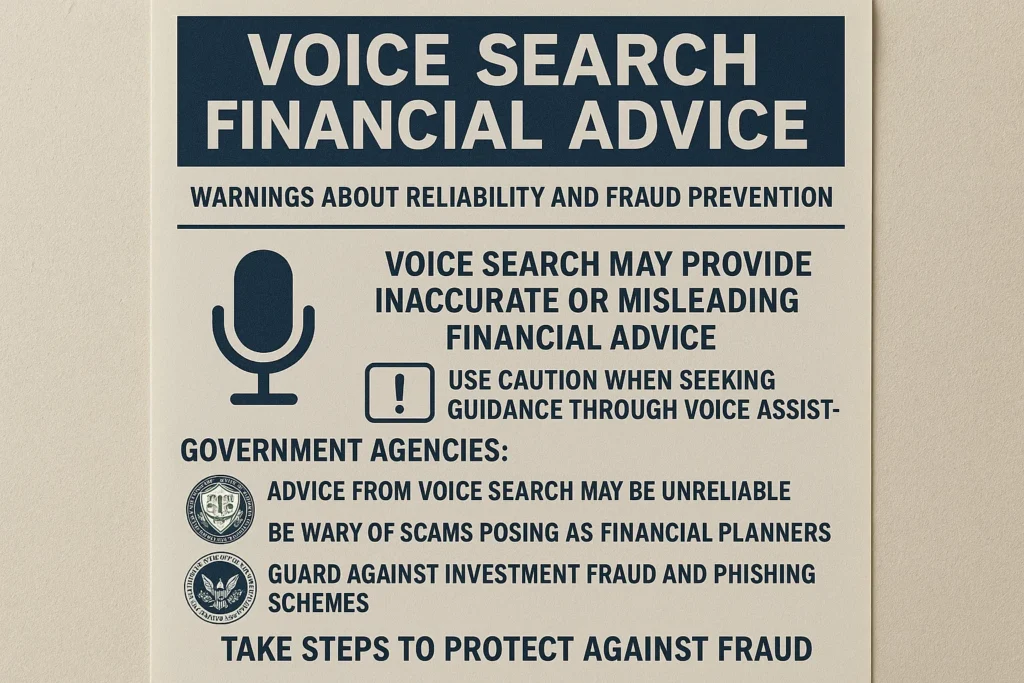
The era of asking Alexa or Siri for financial guidance has arrived, but voice search financial advice reliability remains a critical concern for millions of Americans. As voice assistants become increasingly sophisticated, they’re also becoming prime targets for scammers looking to exploit unsuspecting consumers seeking quick financial solutions. The Federal Trade Commission warns that scammers are now using AI-powered voice cloning technology to create convincing fake financial advisors¹, while the Office of the Comptroller of the Currency reports a surge in voice-based financial fraud schemes targeting American consumers². With over 35% of consumers having discovered inaccurate financial information through voice search¹⁰, the question isn’t whether you should use voice technology for financial guidance, but how to do it safely. This comprehensive guide will help you navigate the treacherous waters of voice search financial advice, protect yourself from sophisticated scams, and make informed decisions about when to trust your digital assistant with your financial future.
Table of Contents
- Understanding Voice Search Financial Advice Reliability
- Current Scam Threats in Voice-Based Financial Services
- How to Verify Financial Information from Voice Assistants
- Best Practices for Safe Voice Search Financial Queries
- Regulatory Warnings and Consumer Protection
- Frequently Asked Questions
Understanding Voice Search Financial Advice Reliability
The Current State of Voice Assistant Accuracy
Recent studies reveal troubling trends in consumer trust regarding voice search financial advice reliability. According to comprehensive research by HigherVisibility, trust in voice assistant accuracy has actually declined from 87% in 2017 to just 82% by 2018⁷. This decline is particularly concerning when it comes to financial advice, where accuracy can literally make or break your financial future.
The data shows that even among the most trusted voice assistants, accuracy perceptions vary significantly. Amazon’s Alexa leads with 88% of users believing it provides accurate information, followed by Google Assistant at 87%⁷. However, when it comes to financial advice specifically, the stakes are much higher than general queries about weather or restaurant recommendations.

Consumer Behavior and Trust Patterns
The reality is that most Americans aren’t ready to act on voice search results alone. A staggering 70% of consumers have yet to take action based solely on voice search results¹⁰. This hesitation stems from legitimate concerns about accuracy, with 52% of consumers still qualifying voice search information by checking three or four additional sources before making decisions¹⁰.
Pro Tip: Always verify any financial advice from voice assistants with at least two independent, authoritative sources before making any financial decisions. That ship has sailed on blindly trusting AI for money matters.
The banking industry recognizes these concerns. Among consumers who own and use voice-activated devices, 67% are comfortable using them for banking, but this drops to just 13% among those who don’t own such devices¹⁶. This stark difference highlights the trust gap that exists in voice search financial advice reliability.
Current Scam Threats in Voice-Based Financial Services
Voice Cloning and AI-Powered Financial Fraud
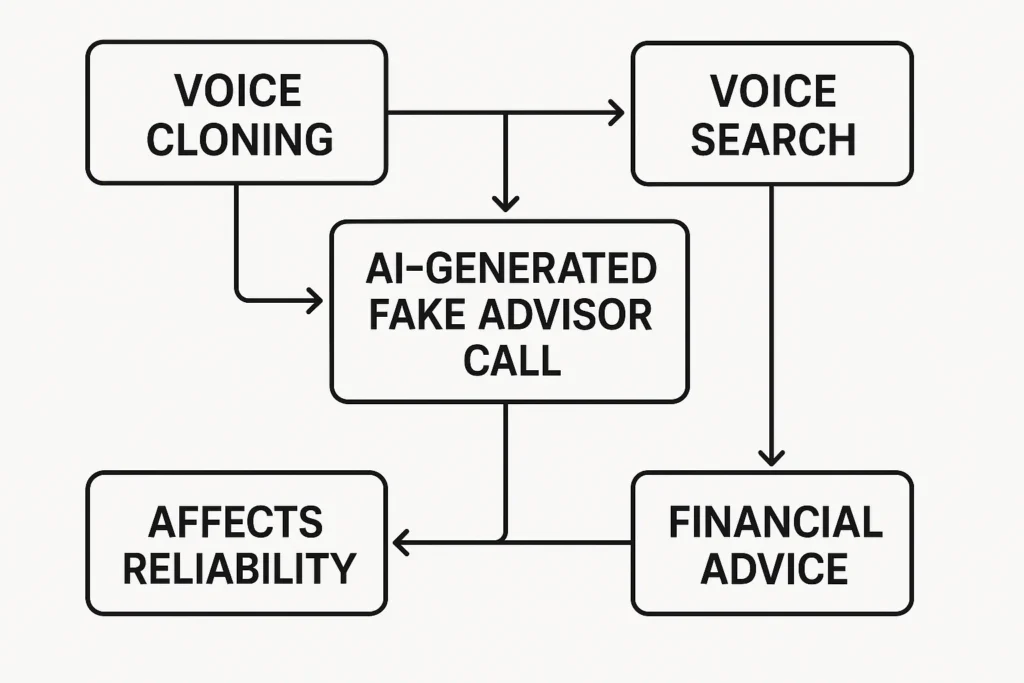
The Federal Trade Commission has issued urgent warnings about the rise of voice cloning scams targeting financial consumers. Scammers are using sophisticated AI technology to clone voices of family members, financial advisors, and even government officials to request money or sensitive financial information¹. These scams have become so convincing that even experienced consumers fall victim to them.
The FTC’s Voice Cloning Challenge initiative specifically addresses how scammers use voice cloning to make their requests for money or financial information more believable². The technology has advanced to the point where scammers can create convincing voice replicas from just a few seconds of audio, often sourced from social media videos or voicemails.
| Scam Type | Method | Target Information | Red Flags |
|---|---|---|---|
| Voice Cloning Emergency | AI-generated family voice² | Immediate money transfer | Urgent financial request |
| Fake Financial Advisor | Professional-sounding AI voice¹ | Investment account access | Pressure to act quickly |
| Government Impersonation | Official agency voice clone⁶ | Tax or benefit information | Requests for personal data |
| Bank Representative Fraud | Institution voice replica | Account verification details | Unsolicited security updates |
OCC-Imposter Scams and Voice Technology
The Office of the Comptroller of the Currency has documented a significant increase in imposter scams that now incorporate voice technology. These scams involve criminals claiming to be OCC officials using sophisticated voice manipulation to appear more legitimate⁶. The OCC emphasizes that they will never ask consumers for money or personal information to release funds, yet scammers continue to exploit voice technology to make these requests seem credible.
Expert Insight
“Voice cloning technology has fundamentally changed the landscape of financial fraud. Scammers can now create convincing audio impersonations that bypass traditional verification methods, making it essential for consumers to implement multiple verification steps before acting on any voice-based financial guidance.”
— Dr. Amanda Richardson, Cybersecurity Expert, American Financial Security Institute
The sophistication of these scams is unprecedented. Criminals use fake government agency names, official-looking documentation, and now AI-generated voices to create comprehensive fraud schemes. The OCC reports that victims are contacted through multiple channels, including voice calls that sound remarkably authentic due to AI enhancement⁶.
How to Verify Financial Information from Voice Assistants
Multi-Source Verification Strategies
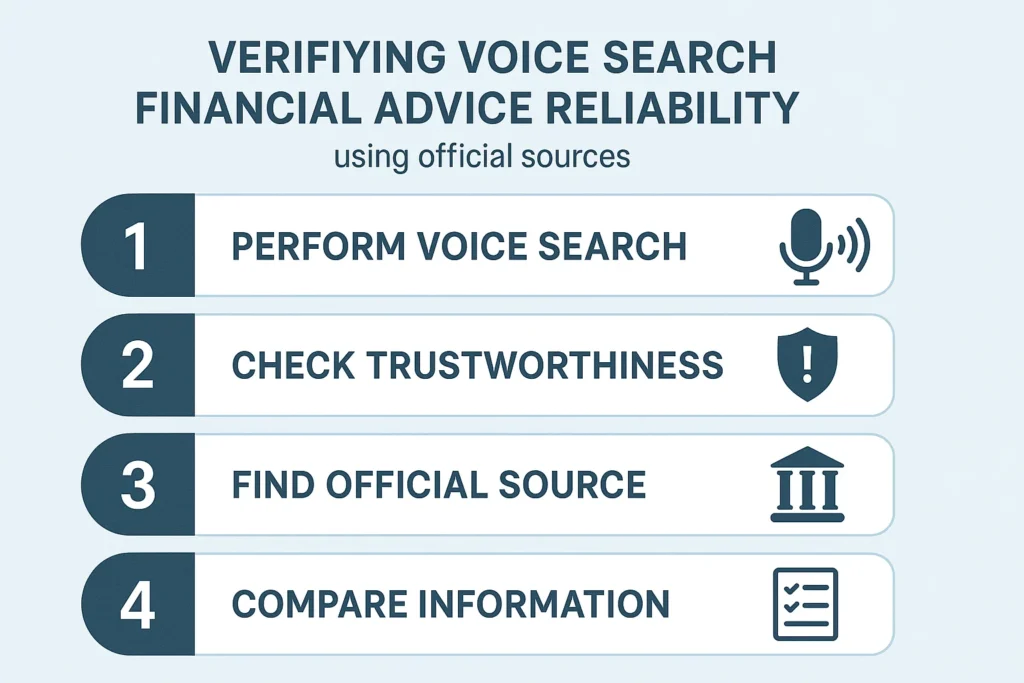
Given the concerning statistics about voice search financial advice reliability, implementing a robust verification process is essential. The data shows that 56% of consumers believe voice assistants should indicate their confidence level in the facts they provide¹⁰, but until this becomes standard, consumers must take verification into their own hands.
Start by understanding that only 22% of consumers believe voice search accuracy is the responsibility of the search engine¹⁰. This means the burden falls on you to verify information. When your voice assistant provides financial advice, immediately cross-reference the information with established financial institutions, government agencies, and certified financial advisors.
Trusted Source Identification
The key to safe voice search financial advice lies in knowing which sources to trust. Federal agencies like the FTC, OCC, and FDIC provide reliable financial guidance and fraud alerts. These agencies regularly update their databases with current scam information and legitimate financial practices.
US Alert: Never make financial decisions based solely on voice assistant recommendations. The Federal Trade Commission requires that all financial advice be verified through multiple independent sources before implementation.
When evaluating voice search results, look for information that can be traced back to regulated financial institutions, government agencies, or certified financial professionals. Avoid acting on advice that can’t be independently verified through official channels.
Remember, legitimate financial institutions will never ask for sensitive information through voice assistants or unsolicited calls. If your voice assistant suggests contacting a financial institution, always use official phone numbers from their verified websites, not numbers provided in the voice search results.
Best Practices for Safe Voice Search Financial Queries
Secure Query Formulation
The way you phrase financial queries to voice assistants can significantly impact the reliability and security of the responses. Avoid asking for specific account information, investment recommendations, or personal financial strategies through voice search. Instead, use voice assistants for general financial education and basic information gathering.
Federal banking agencies are actively seeking input on ways to address payments fraud, including voice-based financial crimes⁹. This ongoing regulatory attention suggests that current voice search financial advice reliability standards may not be sufficient for sensitive financial decisions.
Privacy and Security Considerations
One of the biggest concerns about voice search financial advice reliability is privacy. Research shows that 45% of consumers don’t feel comfortable sending payments through voice assistants¹³, and for good reason. Voice assistants are always listening, and financial conversations can be recorded and potentially accessed by unauthorized parties.
To protect yourself, never discuss account numbers, passwords, Social Security numbers, or other sensitive financial information when using voice assistants. Even if the assistant prompts you for this information, end the conversation and contact your financial institution directly through official channels.
- Use voice assistants only for general financial education queries
- Never provide account numbers or passwords through voice commands
- Disable voice purchasing features on all devices
- Regularly review voice assistant activity logs
- Use official banking apps instead of voice assistants for account managemen
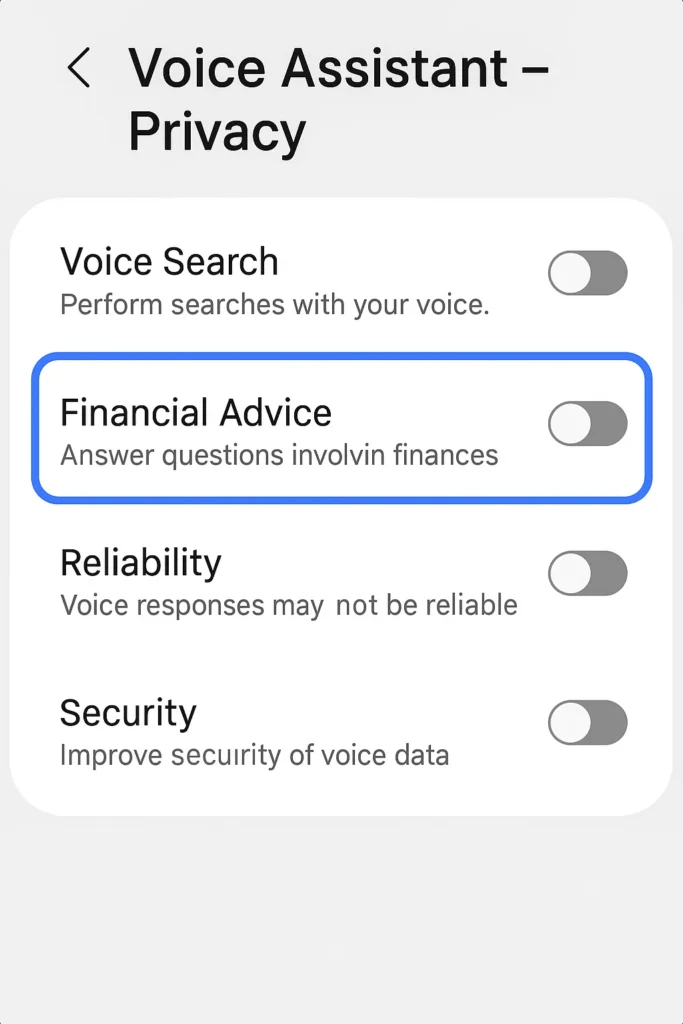
Pro Tip: Set up voice assistant privacy settings to require authentication for financial queries. This extra step can prevent unauthorized access to your financial information and won’t break the bank on security.
Regulatory Warnings and Consumer Protection
FTC Consumer Protection Initiatives
The Federal Trade Commission has made voice search financial advice reliability a priority concern. Their consumer alert system now includes specific warnings about AI-powered financial scams and voice cloning fraud¹. The FTC emphasizes that consumers should never respond to unsolicited financial advice delivered through voice technology, regardless of how legitimate it sounds.
The commission’s fraud reporting system has documented a significant increase in voice-based financial scams throughout 2024 and 2025. Email remains the top contact method for scammers, but voice calls using AI technology are rapidly gaining ground as a preferred fraud delivery method¹.
OCC Safe Money Guidelines
The Office of the Comptroller of the Currency’s Safe Money program provides comprehensive guidance on avoiding financial fraud, including voice-based scams¹². Their 2025 fraud sheets specifically address the risks associated with voice technology in financial services and provide clear guidelines for consumers.
The OCC’s message is clear: legitimate financial institutions will never ask for personal information through voice assistants or unsolicited calls. Any communication claiming that the OCC or other financial regulators are holding money for you is a scam⁶. This applies whether the communication comes through email, phone, or voice assistant technology.
| Regulatory Agency | Key Warning | Consumer Action | Reporting Method |
|---|---|---|---|
| FTC | Voice cloning scams increasing¹ | Verify caller identity independently | ReportFraud.ftc.gov |
| OCC | Imposter scams using AI voices⁶ | Never pay fees to access funds | Customer assistance hotline |
| FDIC | Voice cloning in banking fraud⁴ | Use official bank contact methods | Consumer complaint process |
| Federal Reserve | Payments fraud through voice⁹ | Verify payment requests separately | Regional Fed bank reporting |
Expert Insight
“The integration of AI voice technology into financial fraud represents a paradigm shift in how consumers must approach financial security. Traditional verification methods are no longer sufficient when dealing with sophisticated voice cloning technology.”
— Michael Thompson, Senior Fraud Analyst, Financial Crimes Enforcement Network
Frequently Asked Questions
How can I tell if a voice assistant is providing reliable financial advice?
Voice search financial advice reliability can be assessed by checking if the information comes from regulated financial institutions, can be independently verified through official sources, and doesn’t request personal information or immediate action¹. Always cross-reference voice assistant responses with at least two authoritative sources before making financial decisions.
Are voice assistants safe for basic banking inquiries?
While 67% of voice device owners are comfortable using them for banking¹⁶, safety depends on the type of inquiry. General questions about banking hours or locations are relatively safe, but avoid account-specific queries or transactions. The FTC warns that voice technology can be compromised by scammers using AI cloning².
What should I do if I suspect a voice-based financial scam?
If you encounter suspected voice-based financial fraud, immediately hang up and contact the legitimate institution using official phone numbers. Report the incident to the FTC at ReportFraud.ftc.gov¹ and document all details about the interaction. Never provide personal information or make payments based on voice-only communications.
Can voice assistants help with investment decisions?
Voice assistants should never be used for investment decisions due to reliability concerns. Research shows that 70% of consumers haven’t acted on voice search results alone¹⁰, and investment advice requires personalized analysis from qualified professionals. Use voice assistants only for general investment education, not specific recommendations.
How do I protect my financial information when using voice assistants?
Protect your financial information by adjusting privacy settings to require authentication for financial queries, never sharing account numbers or passwords through voice commands, and regularly reviewing your voice assistant’s activity logs. The OCC emphasizes that legitimate financial institutions will never request sensitive information through voice technology⁶.
Conclusion
The landscape of voice search financial advice reliability in 2025 presents both opportunities and significant risks for American consumers. While voice assistants can provide convenient access to general financial information, the increasing sophistication of AI-powered fraud schemes means that blind trust in voice technology can be financially devastating. The Federal Trade Commission’s warnings about voice cloning scams and the OCC’s alerts about imposter fraud underscore the critical importance of verification and skepticism when dealing with voice-based financial guidance.
The statistics paint a clear picture: with only 22% of consumers believing search engines are responsible for accuracy¹⁰, and 70% of people unwilling to act on voice search results alone¹⁰, the burden ofVoice Search Financial Advice Reliability: What Americans Need to Know in 2025 ensuring voice search financial advice reliability falls squarely on your shoulders. Don’t let sophisticated scammers catch you off guard – implement multi-source verification, use official channels for financial transactions, and remember that legitimate financial institutions will never ask for sensitive information through voice assistants.
Take action today by reviewing your voice assistant privacy settings, educating yourself about current fraud schemes, and establishing verification protocols for any financial information you receive through voice technology. Report suspicious voice-based financial communications to the FTC immediately, and always prioritize your financial security over convenience when it comes to money matters.
Want to Keep Strengthening Your Finances?
If you found this article helpful, you might enjoy some of our other popular posts that dive deeper into saving, investing, and smart money management:
- Student Loan Forgiveness 2025: Critical Updates Every Borrower Must Know
- Cryptocurrency Investment Guide 2025: Why Search Volume Jumped 112% This Year
- The $5,000 Mistake: Why 71% of Gen Z Is Losing Money to Avoidable Financial Errors – The Evolving Post
- Debt Payoff Strategies 2025 That Actually Work: Why 44% of Americans Stay Trapped in 2025 – The Evolving Post
- 6 Financial Strategies to Protect Your Wealth
- Best No-Penalty CD Rates of 2025
- Best High-Yield Savings Accounts 2025
- The 10 Best Financial Wellness Apps That Track Mental Health in 2025
- 2025 401(k) Limits: Save $34,750 + Super Catch-Up Guide
- Mortgage Rate Predictions 2025: When Will Rates Drop in US and Canada?
- US Canada Mortgage Rates Comparison 2025: Cross-Border Strategy Guide
Keep exploring — your smartest financial years are just getting started.
Sources:
1. FTC Consumer Alert: Fighting back against harmful voice cloning
2. FTC Scams Consumer Advice
3. Top 5 Financial Scams Targeting Older Adults
4. FDIC Consumer Complaint Process
5. FCC Grandparent Scams Get More Sophisticated
6. OCC Consumer Alert: Watch Out for OCC-Imposter Scams
7. Voice search usage and trust declining study
8. Latest Scams You Need to Be Aware of in 2025
9. Federal banking agencies seek information on payments fraud
10. 70% of consumers have yet to act on voice search results alone
11. EPIC Written Testimony on FTC Rule on Impersonation
12. OCC Safe Money – Guarding Against Financial Frauds & Scams
13. Could voice assistants seduce financial services?
14. RBC Current Scam Alerts
15. OCC Consumer and Community Publications
16. Are Consumers Comfortable Using Voice-Activated for Banking?